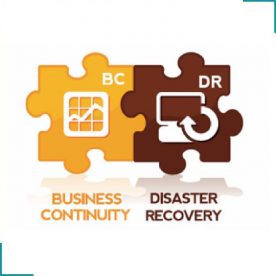
Cloud-based disaster recovery ensures resilience against outages, cyber threats, or system failures. By integrating DR into cloud architecture, IntelliSonic ensures rapid recovery with minimal data loss.
Any unexpected disruptions can significantly impact operations. Our cloud-based disaster recovery solutions safeguard mission-critical systems. We design resilient architectures that ensure rapid recovery with minimal data loss.
Our Services Include:
Recovery Time Objective (RTO) & Recovery Point Objective (RPO) planning
Automated backups and replication
Cross-region failover configuration
Periodic disaster recovery testing
Business continuity documentation and process mapping
Operational continuity even during cyber incidents, hardware failures, or natural disasters.
Disaster Recovery and Business Continuity Services
Unexpected disruptions such as cyberattacks, hardware failures, or natural disasters can severely impact business operations.
Disaster recovery and business continuity planning ensures organizations can restore systems quickly and continue operating during disruptions.
Disaster Recovery Planning
Disaster recovery planning defines how systems will be restored after a failure.
Planning includes:
identifying critical systems and data
defining recovery priorities
creating restoration procedures
establishing backup schedules
Clear recovery plans reduce downtime and ensure systems can be restored quickly.
Automated Backup Systems
Automated backups ensure that data is regularly copied and stored in secure locations.
Backup systems include:
scheduled data replication
encrypted cloud backups
versioned backup storage
cross-region data replication
These backups allow organizations to recover lost or corrupted data quickly.
Failover Infrastructure
Failover infrastructure ensures that systems continue operating even if primary servers fail.
Failover systems automatically redirect workloads to backup environments when outages occur.
This includes:
redundant servers
load balancing systems
secondary cloud regions
automated failover processes
Failover architecture minimizes downtime and maintains service availability.
Business Continuity Planning
Business continuity planning focuses on maintaining essential operations during disruptions.
Plans typically include:
emergency response procedures
communication protocols for employees and customers
temporary operational environments
recovery timelines for critical systems
These strategies ensure organizations remain operational even during major incidents.
RESILIENT DISASTER RECOVERY STRATEGIES FOR BUSINESS PROTECTION
Disaster recovery is a foundational element of modern IT strategy, ensuring that organizations remain protected against unexpected disruptions such as cyberattacks, infrastructure failures, and natural disasters. A resilient recovery framework allows businesses to restore systems quickly, maintain operational continuity, and minimize financial and reputational impact. Cloud-based disaster recovery enhances this capability through scalable infrastructure, intelligent automation, and geographically distributed systems that provide redundancy and reliability across multiple environments.
A structured disaster recovery strategy focuses on understanding business-critical systems and aligning recovery efforts with operational priorities. Recovery Time Objectives and Recovery Point Objectives are carefully defined to ensure that systems are restored within acceptable timeframes while minimizing data loss. Detailed restoration procedures, backup schedules, and risk assessments create a clear and actionable recovery plan. This level of preparation ensures that organizations can respond effectively to disruptions while maintaining confidence in their ability to recover and continue operations.
AUTOMATED BACKUP AND DATA PROTECTION FOR MINIMAL DATA LOSS
Reliable data protection is essential for safeguarding critical business information and maintaining operational stability. Automated backup systems ensure that data is consistently captured, replicated, and stored in secure locations without manual intervention. Regular backups reduce the risk of permanent data loss and allow organizations to restore systems quickly in the event of corruption, deletion, or cyber incidents. Encryption and access controls further enhance data security, ensuring that sensitive information remains protected throughout its lifecycle.
Advanced backup strategies incorporate cross-region replication, version-controlled storage, and scheduled synchronization to provide multiple layers of protection. These capabilities allow organizations to recover data from specific points in time, ensuring flexibility during restoration. Continuous validation of backup integrity ensures that data remains usable and reliable when needed. A well-designed backup framework not only protects information but also strengthens overall business resilience by ensuring that operations can resume quickly with minimal disruption.
FAILOVER INFRASTRUCTURE FOR CONTINUOUS OPERATIONS
Failover infrastructure is critical for maintaining uninterrupted operations when primary systems experience outages or performance degradation. Redundant environments, distributed cloud regions, and intelligent load balancing systems work together to ensure that applications remain available even during failures. Automated failover processes detect issues in real time and seamlessly redirect workloads to backup systems, allowing operations to continue without noticeable disruption to users or customers.
High-availability architectures are designed to eliminate single points of failure and provide continuous system performance under varying conditions. Infrastructure redundancy ensures that critical services remain accessible, while real-time monitoring supports rapid detection and response to potential issues. Seamless failover capabilities not only reduce downtime but also enhance user experience and trust. This approach enables organizations to maintain productivity and deliver consistent service levels even in the face of unexpected challenges.
BUSINESS CONTINUITY PLANNING FOR OPERATIONAL STABILITY
Business continuity planning ensures that essential operations continue during and after disruptive events, enabling organizations to maintain stability and minimize impact. Comprehensive continuity plans define how teams respond to incidents, manage communications, and sustain critical functions while systems are being restored. Clear documentation of processes, escalation paths, and responsibilities ensures that every stakeholder understands their role during a disruption, reducing confusion and enabling a coordinated response.
Effective continuity strategies include emergency response procedures, communication frameworks for employees and customers, temporary operational environments, and clearly defined recovery timelines. Regular testing and simulation exercises validate these plans and identify areas for improvement, ensuring readiness for real-world scenarios. Continuous refinement of continuity processes strengthens organizational resilience and adaptability. This structured approach ensures that businesses can operate with confidence, knowing they are prepared to navigate disruptions while maintaining service delivery and operational integrity.